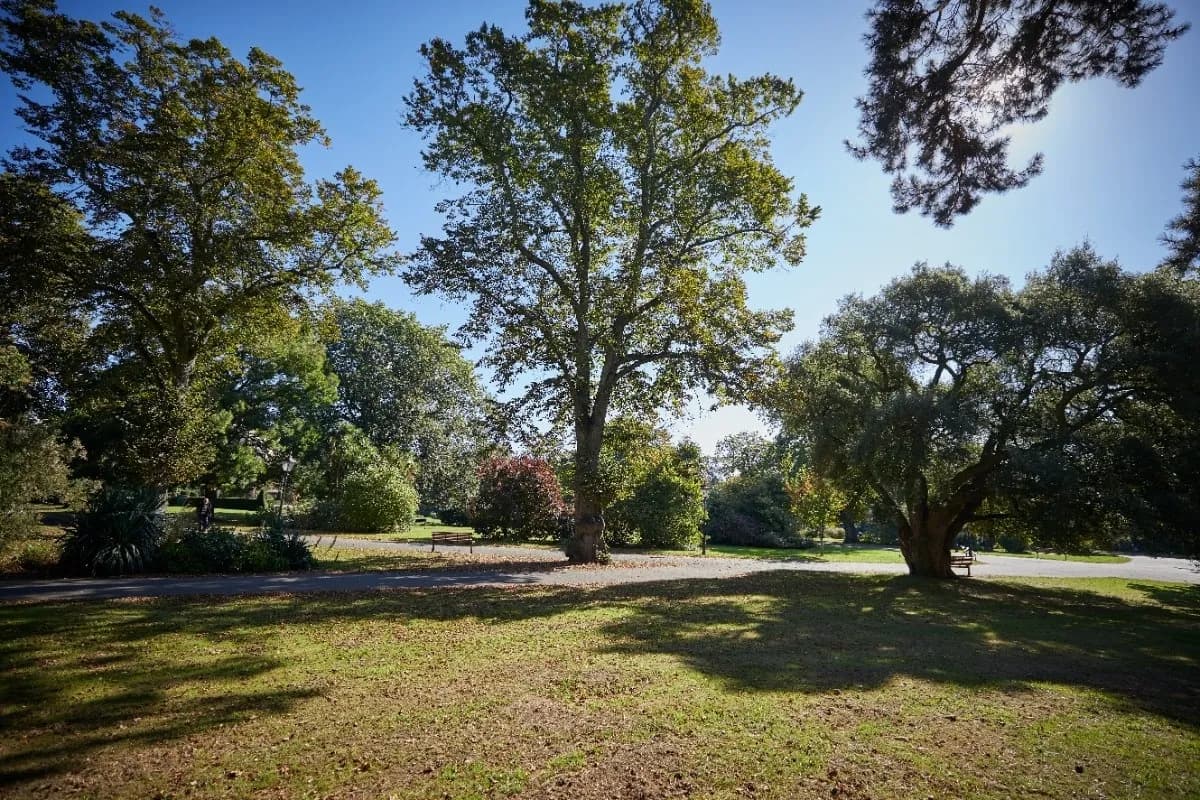
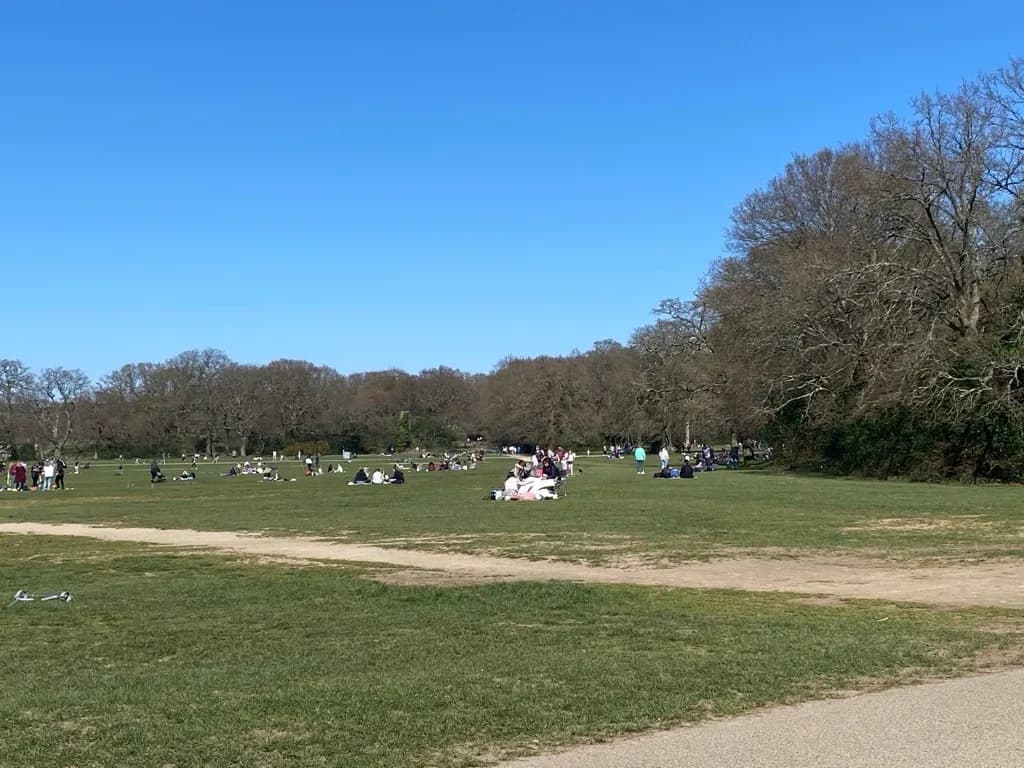
Southampton Common has served as the city's shared ground for nearly eight centuries, evolving from medieval grazing land to a 365-acre public park that now hosts everything from weekly Parkruns to major music festivals.
The 1228 Charter and the Cowherd Tradition
The common's documented history begins on 13 May 1228, when Nicholas de Sirlie, Lord of the manor of Shirley, renounced his claims over the land in a formal dispute with Southampton's burgesses. The settlement established that only borough residents held rights of common, a status that possibly dated back to the Anglo-Saxon settlement of Hamwic around AD 500.
For centuries, the land served its original purpose: communal grazing. The office of cowherd was a formal position, with holders paid twopence per cow in the 17th century and required to rent a house on the common for twenty shillings annually. Elizabeth Fawkens, widow of a previous cowherd, held the post for five years from 1675. The cowherd maintained gates, fences, and banks, ensuring the system functioned as commoners jostled for limited space; by the mid-16th century, each resident was restricted to no more than two animals.
In 1762, Alderman William Knight rebuilt the cowherd's house at his own expense, increasing the rent to £6 per year, which was distributed to the poor of Southampton's parishes. The building later became an inn when leased to brewers in 1789, and the office of cowherd ceased entirely between 1834 and 1836. The Cowherds Inn still stands near the children's play area, a landmark linking modern visitors to this medieval tradition.
Water, Roads, and Victorian Transformation
The common's utility extended beyond agriculture. In 1760, the Southampton to Winchester turnpike trust straightened the road through the common, now the A33 Avenue, with trees planted along its length from at least 1763. William Gilpin praised the approach in 1798; by 1967, it was described as "one of the finest town approaches in Britain, if not the world."
Water infrastructure dominated the 19th century. The Southampton Waterworks Commissioners constructed the first reservoir behind the Cowherd's Inn in 1803. An artesian well, begun in 1835, reached a depth of 1,317 feet by 1883. The Southampton Waterworks Amendment Act 1850 authorised a pair of reservoirs on the northern common, holding water drawn from the River Itchen at Mansbridge.
The pivotal shift came in 1844 with the Southampton Marsh Act, which formally transformed the grazing land into a public park. A racecourse had operated briefly from 1814 to 1848, and was rebuilt in 1860 with races continuing until 1881. The first Royal Counties Agricultural Society show arrived in 1873. The crescent-shaped Ornamental Lake, constructed in 1888 partly as a job creation scheme, remains a central feature.
Wars, Conservation, and Festivals
The common's military utility proved significant in both world wars. Troops preparing to depart via Southampton port used it as a rest camp during the First World War; it did not return fully to council control until 1919. During the Second World War, the land served as a camp for allied forces and as a prisoner-of-war camp. The final section was not handed back to civilian authorities until August 1950.
Post-war Southampton claimed the common for celebration. The annual Southampton Horticultural Show and fete began in 1947, renamed the Southampton Show in 1952. This evolved into the Balloon & Flower Festival in 1988, which peaked at around 150,000 attendees before being axed in 2005 when numbers dropped to 75,000. Revival attempts in 2009 (11,000 signatures) and 2015 (3,000 signatures) failed due to conflict with Southampton Airport's airspace.
Legal protections hardened during this period. A 1968 High Court challenge by the Southampton Commons and Parks Protection Society, Southampton Civic Trust, and Friends of Old Southampton defeated council proposals for new car parks, establishing that driving motor vehicles on the common was illegal under the Southampton Corporation Act 1931. A 1984 case ruled that religious events were not of "like nature" to fairs and shows, and therefore could not be held on the common.
The Common People Festival launched in 2015, bringing Duran Duran, Primal Scream, Craig David, and Public Enemy to Southampton. The event attracted more than 10,000 people per day at its peak, with headliners including Lily Allen, the Jacksons, and Boney M in 2018. It was axed in 2019 after parent company Common People Festival Ltd went into liquidation with debts exceeding £543,000.
A Site of Special Scientific Interest
Natural England designated 223 acres of the common as a biological Site of Special Scientific Interest on 24 February 1987. The site supports one of Britain's largest populations of the nationally rare great crested newt. Habitats include woodland, parkland, rough grassland, ponds, and wetlands. The designation reflects the common's dual identity: a space for public recreation and a protected ecological resource.
Today's visitors find the Hawthorns Urban Wildlife Centre on the former Southampton Zoo site, which operated from 1961 to 1985 before closing following protests over poor conditions. The Old Cemetery, established in 1846 on land split from the common under the Southampton Cemetery Act 1843, borders Hill Lane to the west. The Cemetery Lake attracts birdwatchers, while model yacht enthusiasts use the former third reservoir, converted for sailing models from 1894.
The weekly Parkrun starts near the Hawthorns Centre every Saturday morning. The common retains its role as Southampton's collective ground, just as it was when Nicholas de Sirlie signed away his claims in 1228, though the cows have given way to runners, festival-goers, and great crested newts.